
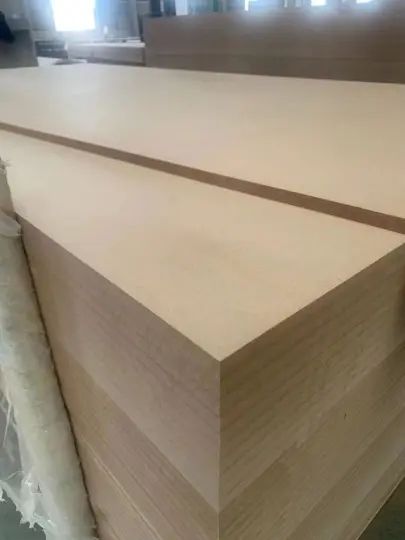
MDF—Medium-Density Fiberboard—is one of those things you probably walk past all the time without realizing it. It starts as wood fibers, gets mixed up with resin and wax, and then gets pressed into panels with a lot of heat and pressure. What you end up with is a smooth, tough board that’s easier on your wallet than solid wood and a breeze to work with. No wonder it pops up everywhere in the timber world.
There’s a whole lineup of MDF types, each made for a specific job. Standard MDF is your everyday go-to. Need something for a bathroom or kitchen? Moisture-resistant MDF steps up. Fire-retardant MDF covers spaces where safety matters more. High-Density Fiberboard (HDF) is just MDF, but beefed up—denser and tougher. Lightweight MDF? That’s for when you don’t want to break your back hauling panels around.
And then there are all the finishes. Raw MDF is just the basic board, but you can get it laminated, veneered, painted, glossy—you name it. Some are super thin, some thick, and some are even flexible for those tricky curves. Want something for outside? Look for exterior-grade MDF. Need to keep things quiet? Acoustic MDF takes care of sound.
There’s more. You’ll find MDF covered with PVC film, melamine, or textured layers. Ultralight versions help when every pound counts. Perforated MDF works for sound panels. If you care about air quality or the planet, there are formaldehyde-free and recycled options. MDF Tricoya? That one really stands up to moisture and decay.
And sure, blockboard, gypsum boards, and particle board aren’t technically MDF, but they get lumped in the same conversations a lot, since they’re used in similar ways for furniture and building.
Bottom line: whether you need a slick cabinet door, a curved panel for a custom job, or something that shrugs off water, there’s an MDF out there that does the trick.


Reviews
There are no reviews yet.